FAPI Imaging

FAPI Imaging

Revolutionizing Cancer Detection with Fibroblast-Targeted Molecular Imaging

Cancer imaging is rapidly evolving, and FAPI imaging is emerging as one of the most promising advances in modern nuclear medicine. Unlike tracers such as FDG—which reflect glucose metabolism in tumor cells—FAPI targets fibroblast activation protein (FAP), a key marker expressed on cancer-associated fibroblasts (CAFs) within the tumor microenvironment.

This shift from imaging tumor metabolism to imaging the tumor stroma offers a more comprehensive understanding of some of the cancers, helping clinicians detect, stage, and manage disease with greater precision.

FAPI is also a versatile imaging platform, applicable in both PET and SPECT, depending on the radionuclide used making it adaptable across different clinical settings.

At Transcurie Limited, we are proud to support nuclear medicine departments in Kenya and across Africa by expanding access to advanced FAPI-based imaging solutions.
What is FAPI Imaging?

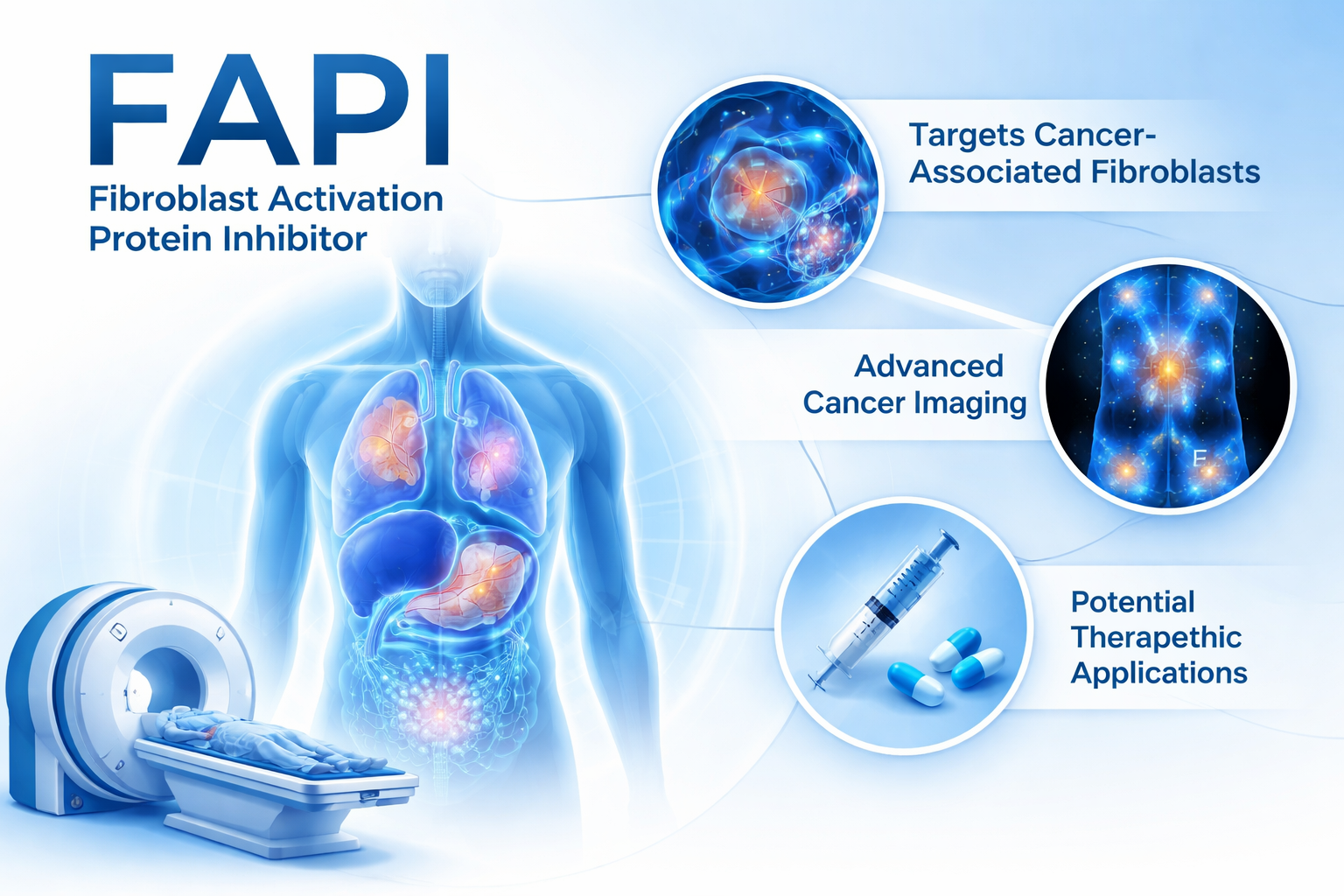
FAPI imaging uses specialized tracers that bind to fibroblast activation protein (FAP), which is highly expressed in the supportive tissue surrounding many tumors.

By targeting cancer-associated fibroblasts rather than just tumor cells, FAPI imaging can reveal cancers that may otherwise be difficult to detect using traditional methods.

Why is FAPI PET Imaging Important?

FAPI imaging offers several practical advantages in clinical care:

  • Clearer images due to high tumor-to-background contrast
  • Better detection in organs like the liver, brain, and gastrointestinal tract
  • Faster scans, often completed shortly after tracer injection
  • Effective imaging for tumors with low FDG uptake
  • Minimal patient preparation, with no strict fasting requirements

These benefits can translate into earlier detection in some cancers, more accurate staging, and improved treatment planning.

FAPI and the Future of Cancer Care

FAPI is also opening new possibilities in theranostics—a growing field where the same molecule is used for both diagnosis and treatment.

With the right radionuclides, FAPI can be used to:

  • Guide personalized treatment decisions
  • Deliver targeted radionuclide therapy
  • Integrate seamlessly across PET, SPECT, and therapeutic applications

This positions FAPI as more than just an imaging tool—it’s part of the future of precision oncology.

Expanding Access in Kenya and Beyond

At Transcurie Limited, our mission is to make advanced molecular imaging more accessible by:

  • Supplying FAPI-based imaging tracers
  • Supporting safe handling and reliable delivery
  • Empowering clinicians with tools for better cancer care

Author

Transcurie

Leave a comment

Your email address will not be published. Required fields are marked *